
TL;DR — the essentials at a glance
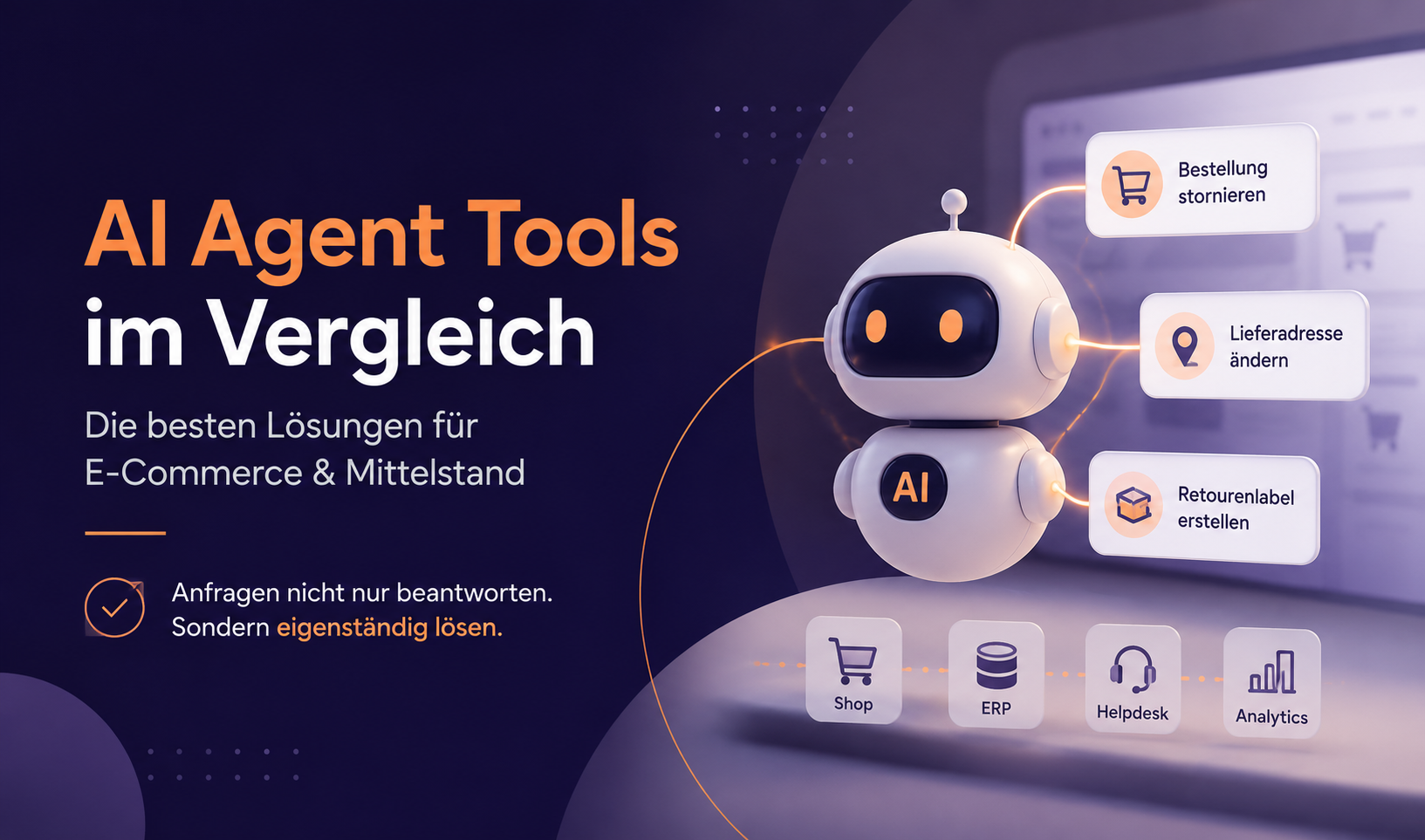
- An AI agent tool differs from a classic chatbot in that it doesn't just answer requests but resolves them on its own: canceling an order, changing a delivery address, creating a return label.
- There's no single best solution; the right choice depends on the use case: melibo for the DACH mid-market with ERP integration, Cognigy for enterprise voice, Fin, Gorgias or Ada rather for internationally oriented teams.
- International pay-per-resolution providers like Fin (formerly Intercom), Gorgias and Ada primarily target English-speaking or US-oriented organizations and require additional GDPR review.
- Prices range from around $29 to get started (Tidio) to six-figure annual contracts (Ada, Cognigy Enterprise).
Transparency note:
This comparison comes from melibo. We are ourselves the provider of one of the solutions listed here. We've tried to assess all ten tools against the same verifiable criteria (see the section “The criteria we used”) and also point out where melibo has weaknesses, for example in voice bot features. The list below is sorted alphabetically by provider name; it's not a ranking.
Definition:
An AI agent tool is a software solution that doesn't just answer customer requests but resolves them on its own, for example by canceling an order, changing a delivery address or creating a return label. Unlike a classic chatbot, an AI agent connects directly to shop, ERP and helpdesk systems and takes real actions there, without a human having to step in.
An AI agent tool automates your customer service by understanding requests, planning the necessary steps and carrying them out directly in your systems. This article ranks ten relevant providers for the DACH market in 2026 by five criteria: GDPR hosting, native integrations, real automation level, German language quality and pricing model. If you're looking for a classic conversational chatbot instead, our comparison of the 8 best AI chatbots for businesses gives a broader market overview. Here, the focus is on which tool actually gets tasks done instead of just answering.
What's the difference between an AI agent and a classic chatbot?
A classic chatbot answers questions from a knowledge base. An AI agent goes a step further: it recognizes the intent behind a request, plans the necessary steps and carries them out on its own in connected systems, such as the shop, ERP or helpdesk. You'll find the technical definition in the melibo glossary on agentic AI. For this comparison, one question matters most: does the tool actually resolve the request, or does it just give an answer that a person then has to act on manually?
The criteria we used
We assess all ten providers against the same five criteria so the ranking stays comparable:
GDPR hosting and compliance: where data is processed, whether there's a data processing agreement and how transparent the provider is about subprocessors.
Native integrations: which shop, ERP and helpdesk systems are connected without middleware, especially Shopware, Xentral, Zendesk, Freshdesk and GREYHOUND.
Automation level: how many requests are actually resolved without human intervention, not just answered, and how robust the stated figures are.
German language quality: how natural the system is in German, and whether the provider is focused on the German-speaking market at all.
Pricing model and transparency: whether billing is predictable, such as a flat rate, or whether pay-per-resolution costs rise as automation increases.
Ten AI agent tools for customer service in 2026 at a glance
The following list is sorted alphabetically by provider name, not by rank. Each heading names the use case each provider fits best.
Best choice for very large, international organizations with high multilingual volume: Ada
Ada is an AI-powered customer experience company based in Toronto whose platform is designed for companies with at least 300,000 customer service conversations a year. Users rate Ada 4.6 out of 5 stars on G2. Pricing is individual; according to procurement data, annual contracts have a median of around $70,000, with enterprise deals reaching $300,000 and more. Strength: mature omnichannel automation for very large, multilingual organizations. Weakness: no DACH focus, no native integrations for Shopware, plentymarkets or GREYHOUND, German language quality isn't a development priority, and implementation takes 8 to 16 weeks according to market observers.
Best choice for mid-sized companies and enterprises needing both chat and voice: BOTfriends
BOTfriends is fully GDPR-compliant, hosted on servers within the EU and also aligned with the requirements of the EU AI Act. The company is based in Würzburg and has 51 reviews on OMR Reviews. What sets it apart from many pure chat platforms: BOTfriends covers both text-based chat and voice bots for telephony. Entry prices are around €2,490 a month, positioning the provider clearly in the mid-market and enterprise segment. Strength: one platform for chat and phone automation, no-code creation without programming skills. Weakness: high entry price for smaller teams, no native DACH shop integrations such as Shopware.
Best choice for DACH and Benelux D2C brands focused on WhatsApp: ChatArmin
Chatarmin is a WhatsApp marketing and customer service platform from Vienna, developed specifically for the DACH market, with GDPR-compliant EU hosting as standard. According to the provider, over 310 brands use its combination of WhatsApp campaigns and AI-powered support chatbot, with native connections to Shopify and Klaviyo. ChatArmin performs strongly on review platforms: 4.9 out of 5 stars on G2 and 4.8 out of 5 on OMR Reviews. Strength: the strongest WhatsApp automation for DACH and Benelux D2C brands. Weakness: no focus on classic helpdesk environments such as Zendesk, Freshdesk or GREYHOUND; prices aren't public and are negotiated individually.
Best choice for enterprise contact centers with high call volumes: Cognigy (now part of NiCE)
Cognigy was founded in Düsseldorf in 2016 and targets companies that want to automate customer service at contact center level. Since September 2025, Cognigy has been part of NiCE. The platform meets GDPR, ISO 9001 and SOC2 requirements and can be run on-premise, in a private cloud or in a public cloud. Its user rating on G2 is 4.6 out of 5 stars. According to the provider, customers such as DATEV have relied on Cognigy's privacy-compliant voice bot solutions for years. Strength: enterprise-grade scaling for high call volumes and complex multi-agent architectures. Weakness: enterprise pricing in the five- to six-figure annual range, implementation times of 4 to 12 weeks, no native DACH shop integrations like Shopware or plentymarkets.
Best choice for internationally oriented teams with moderate AI volume: Fin (formerly Intercom)
In 2026, Intercom rebranded around its AI agent as Fin, while the helpdesk plans are still sold under the Intercom name. In June 2026, Salesforce announced it would acquire Fin for around $3.6 billion; the deal had been signed but not yet closed at the time of the announcement. Fin charges $0.99 per outcome, with a base plan of $49 a month including 50 resolutions, plus seat costs when used in its own helpdesk. Fin has more than 3,800 reviews on G2 with 4.5 out of 5 stars. Strength: broad ecosystem connectivity, also usable on Zendesk or Salesforce. Weakness: hosting is primarily in the US; EU hosting is available but mostly reserved for enterprise contracts, so German companies with strict data location requirements need an additional GDPR review. Costs can rise quickly at high automation levels, as there are no volume discounts.
Best choice for Shopify shops focused on order status and return requests: Gorgias
Gorgias is a US company with deep Shopify integration for order status, returns and shipping questions, rated 4.6 out of 5 stars on G2 with 548 reviews. Billing isn't per seat but per ticket, while the AI agent costs an extra $0.90 per automated interaction on most plans, with quotas of around 90 to over 2,500 automated interactions depending on the plan – and every conversation resolved by the AI agent also counts as a ticket, which effectively means double billing. Strength: very strong native Shopify connection for WISMO (“Where is my order?”) requests and return processes. Weakness: no Shopware integration, a US-centric pricing model in US dollars, and costs rise quickly in peak seasons like the holiday period.
Best choice for SMEs with omnichannel needs and limited ERP integration effort: Lime Connect (formerly Userlike)
Userlike rebranded in September 2025 and has since operated as Lime Connect. The company is based in Cologne and is part of Sweden's Lime Technologies. The platform combines autonomous AI agents with a digital copilot for support staff and a central inbox for website chat, WhatsApp, Instagram and other channels. According to current price overviews, the Team plan costs around €90 a month on an annual subscription with 4 seats; the AI agent can be booked as an add-on module. Strength: a mature omnichannel approach with a clean handover between bot and human. Weakness: no native ERP integrations for Xentral or plentymarkets; deeper shop backend connections are less developed than with specialized e-commerce solutions.
Best choice for the DACH mid-market and e-commerce with ERP and shop integration and strict GDPR requirements: melibo
melibo is a customer service automation platform from Bensheim near Frankfurt that develops AI agents for the DACH mid-market and e-commerce. The platform connects natively to eight systems, including Shopware, Shopify, plentymarkets, Zendesk, Freshdesk, GREYHOUND, Salesforce and the ERP systems Xentral and SAP – more native integrations than any other provider in this comparison, with no middleware required. The melibo AI agent cancels orders, changes delivery addresses and creates return labels directly in the connected system. At customer Deuba, this brought cost per ticket down from €3.00 to €0.20, with 40% fewer tickets. All servers are in Germany, and the solution is GDPR-compliant and certified to ISO 27001 and ISO 9001. On OMR Reviews, melibo is rated 4.9 out of 5 stars. Weakness: voice bot functionality for phone channels isn't the focus – if you mainly want to automate telephony, take a look at Cognigy. Pricing for the DACH mid-market typically starts at around €500 a month; exact terms on request.
Best choice for marketing-oriented website chat automation without deep helpdesk integration: moinAI
moinAI is a Hamburg-based AI chatbot platform focused on automated customer communication in website chat. A special feature: the system offers a GDPR data processing agreement and enables automatic deletion of user data after a defined period, hosted in a German data center in Limburg an der Lahn at OVHcloud. Customers include FAZ, Spiegel and Fressnapf; on OMR Reviews, its rating is around 4.4 to 4.5 out of 5 stars with over 100 reviews. Strength: very user-friendly without technical know-how, good value for marketing-oriented use cases. Weakness: deeper helpdesk integrations such as Zendesk often require third-party connectors, and price information on the market varies considerably by source, from around €150 to over €400 a month plus a setup fee.
Best choice for small teams with a tight budget and a simple Shopify or WooCommerce setup: Tidio
Tidio is registered in two places, with headquarters in San Francisco and a subsidiary in Szczecin, Poland; it hosts on AWS servers within the EU and is certified to SOC2 and the EU-US Data Privacy Framework. The AI agent Lyro can be booked as a separate add-on and is billed per conversation. Market observers point out that Tidio converts US dollar prices 1:1 into euros, so DACH customers effectively pay a premium of around 17 percent. Strength: very low-cost entry, wide availability. Weakness: no native DACH market focus; the Lyro billing model with several separate quotas makes total costs hard to plan as automation increases.
Hosting, integrations and prices compared
Hosting shows a clear DACH advantage: melibo, Lime Connect and BOTfriends process data entirely in Germany, and Cognigy also offers an on-premise option for particularly sensitive industries. moinAI and ChatArmin host in the EU, as does Tidio via AWS data centers, though with a US parent company in the background. Fin, Gorgias and Ada host primarily in the US or Canada; EU hosting is only available for enterprise contracts at Fin, and while it can generally be booked at Gorgias, billing remains exclusively in US dollars.
In terms of native integrations, melibo connects to eight systems, including Shopware, Shopify, plentymarkets, Xentral, SAP, Zendesk, Freshdesk and GREYHOUND – more than any other provider in this comparison. Cognigy and BOTfriends score with SAP, Salesforce and Microsoft Dynamics connections for enterprise system landscapes, while Gorgias and ChatArmin focus on Shopify and Shopify plus Klaviyo respectively. Lime Connect covers Zendesk and Salesforce; Fin and Ada also serve Zendesk and Salesforce, but without DACH-specific ERP or shop systems. Tidio remains limited to classic e-commerce connections with Shopify and WooCommerce.
The actual automation impact – resolving requests without human intervention – is concretely documented for melibo at customer Deuba, with 40% fewer tickets. Cognigy achieves high rates in enterprise voice; independent sources put Tidio at 40 to 60 percent and Gorgias at 26 to 56 percent, depending on the case study. Fin and Ada advertise high automation rates, but these are mostly provider-reported and hardly independently verified. Lime Connect and BOTfriends rely more on a combination of automation and copilot support for people.
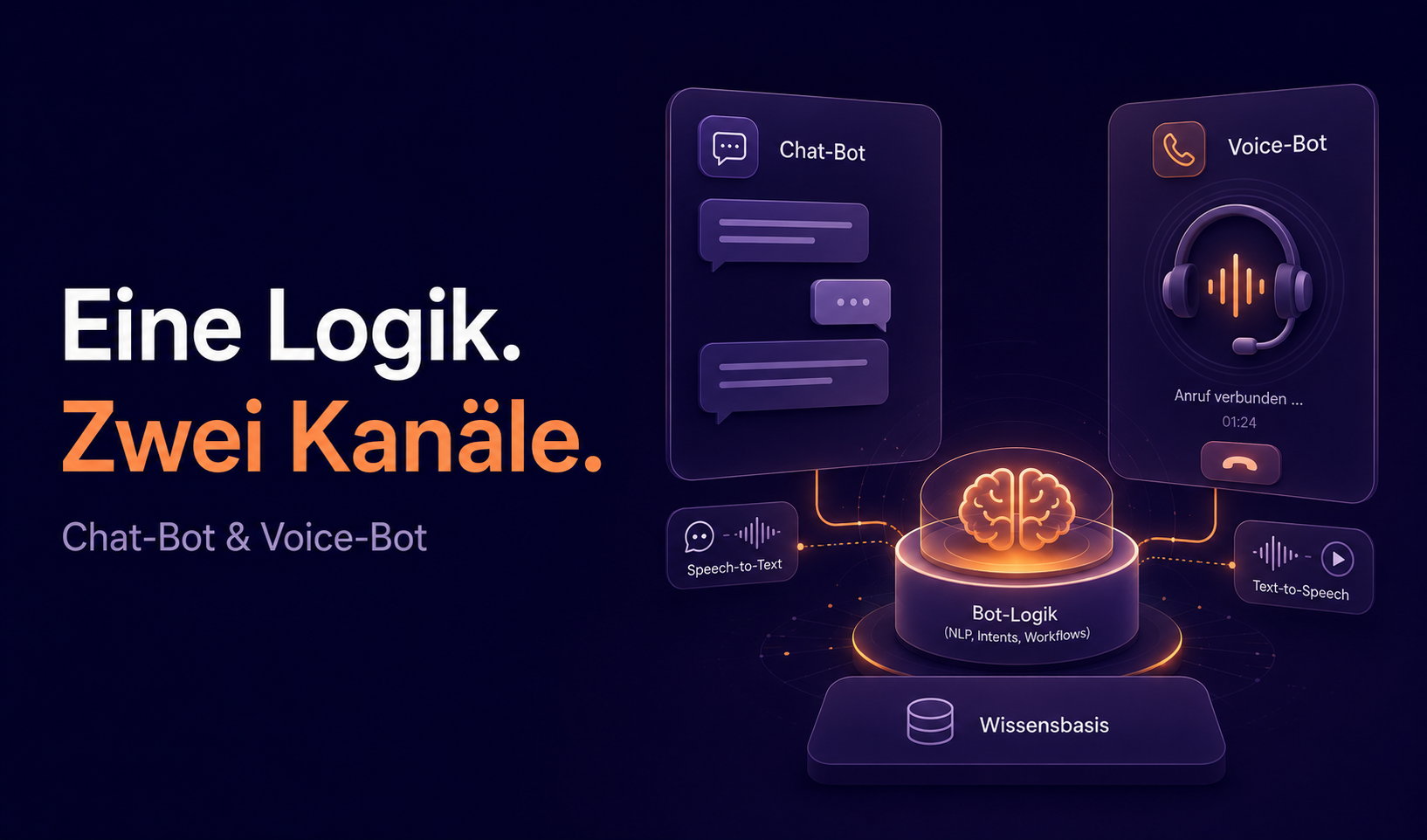
German language quality is strongest at melibo, Lime Connect, moinAI, BOTfriends and ChatArmin, because these providers were developed in the DACH region. Cognigy supports over 100 languages at a high level. Tidio and Gorgias deliver solid but not DACH-optimized language quality; German isn't a development priority at Ada, and Fin also focuses on the English-speaking market.
On price, Lime Connect is the cheapest DACH entry point at around €90 a month, followed by Tidio at around $29. melibo typically starts at €500 a month for mid-sized companies, BOTfriends considerably higher from around €2,490 a month. Fin and Gorgias also charge per resolved conversation, which can lead to hard-to-plan costs as automation increases. Cognigy and Ada are in the four- to six-figure annual range and are negotiated individually only; moinAI and ChatArmin sit in between, with figures that vary by source.
The GDPR and the EU AI Act: what matters when choosing a provider
For companies in Germany, choosing an AI agent tool in 2026 is also a compliance decision. A data processing agreement under Art. 28 GDPR is mandatory as soon as personal data is processed – and practically every customer interaction does that. In addition, from August 2026, Art. 50 of the AI Act (Regulation (EU) 2024/1689) requires that users can recognize when they're talking to an AI system. For sensitive industries, the BSI C5 criteria catalog explicitly recommends hosting within the EU. You'll find a detailed overview in our guide GDPR-compliant AI chatbots: what companies need to know and in the article EU AI Act in customer service: what companies must implement by August 2026.
Frequently asked questions (FAQ)
Which AI agent is best for the German market?
There's no single best solution; the right choice depends on the use case. For the DACH mid-market and e-commerce with shop and ERP integration, melibo covers the widest range of the providers compared here with eight native integrations. For enterprise contact centers with high call volumes, Cognigy is the most established option. International providers like Fin, Gorgias or Ada are better suited to globally oriented, English-speaking organizations.
How much does an AI agent in customer service cost?
The range is wide. SME solutions like Lime Connect start at around €90 a month, Tidio at around $29. Mid-market solutions like melibo start at around €500 a month. Enterprise platforms like BOTfriends, Cognigy or Ada use individual pricing in the four- to six-figure range. Pay particular attention to pay-per-resolution models like Fin, Gorgias or Tidio's Lyro add-on: they look cheap but quickly become expensive as automation increases.
From what ticket volume does an AI agent pay off at all?
As a rule of thumb, from around 1,200 support tickets a month the savings typically outweigh the total cost of ownership of a fully automated AI agent. You'll find the exact formula and an interactive calculator in the article At what ticket volume does an AI agent pay off?
Can Fin, formerly Intercom, be used in a GDPR-compliant way in the German market?
Fin can be used in a GDPR-compliant way, but hosting is primarily in the US, and EU hosting is mostly reserved for enterprise customers. For German companies with strict data location requirements, it's worth taking a close look at the data processing agreement and subprocessor list before signing.
What's the difference between an AI agent and a classic chatbot?
A classic chatbot answers questions from a knowledge base. An AI agent independently takes actions in connected systems, such as canceling an order or changing a delivery address. More on this in the article Chatbot vs. AI agent: what's the difference?