The future of customer service: the software you should know now
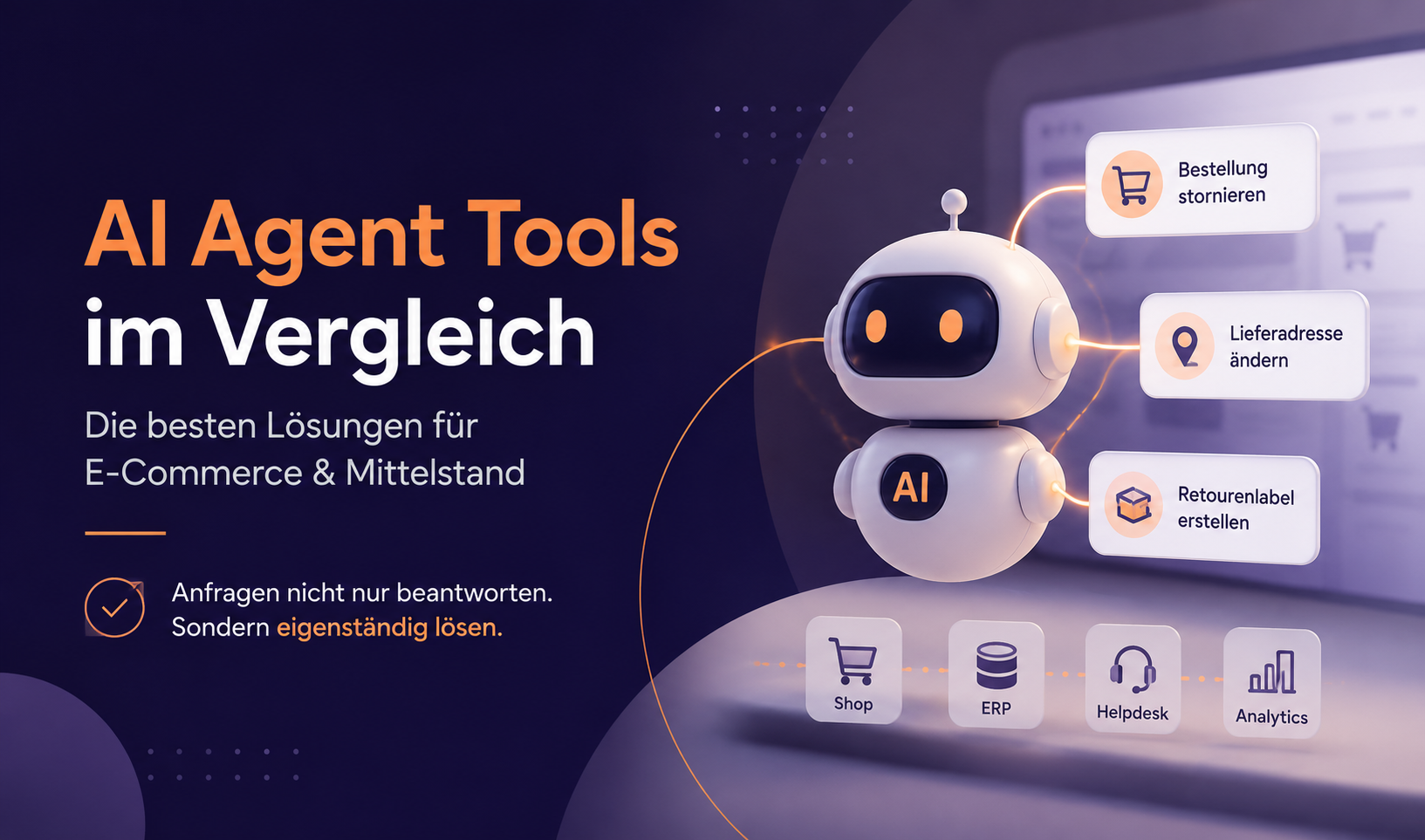
Customer service today is about more than quick answers – it's about being efficient, personal and available around the clock. But which tools help you get there? In this article we take a close look at the best solutions: smart chatbots that talk to your customers 24/7, helpdesk solutions that bring order to the chaos, and ticket automation that drastically simplifies time-consuming processes. Find out which software makes your customer service future-proof and which trends you can't afford to miss.

Customer service software benefits from AI innovation, whether it's a chatbot, helpdesk software or a ticket system. All of them are designed to give your service agents room to breathe while increasing customer satisfaction.
Which customer service software is right for your company?
It's no news that different companies have different needs. Large companies tend to use helpdesk solutions more often than small ones. Smaller companies, on the other hand, look for resource-saving solutions such as chatbots or ticket automation, which in some cases can even replace a helpdesk. Here are the pros and cons of each solution:
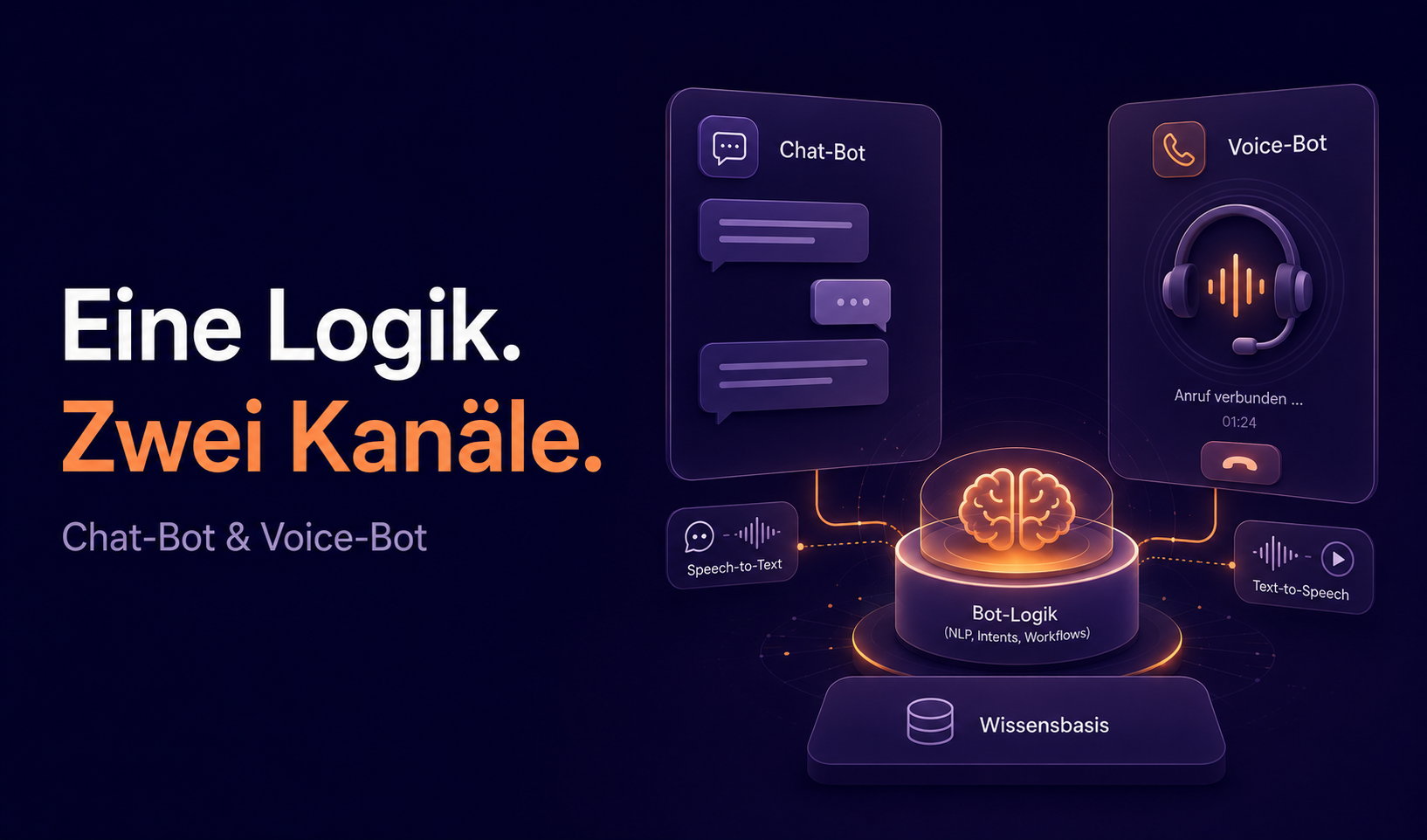
Chatbots: live and direct
For many people, even a contact form on your website is a big hurdle to reaching your customer service. Considering that it often takes just one negative interaction for customers to switch to a competitor, it's clear how important it is to remove these hurdles. A chatbot is versatile, whether in customer service or internally. These are the benefits of using a chatbot as customer service software:
Accessibility and immediacy
A small chatbot that is always available and just one click away can help. It can also approach your customers proactively and clear the first hurdles in customer communication. Unlike human service agents, a chatbot on your website or in your online shop is available 24/7. In a live conversation, answers have to come immediately. Chatbots are on the ball and reply within seconds.
And if the chatbot does make a mistake, customers are more forgiving towards a bot that always stays polite and neutral. This prevents a lot of potential conflict between your customers and your service agents. Both sides then solve the problem the chatbot couldn't, working together instead of against each other.
Revenue potential in customer service with direct handover to live chat
If customers linger on the checkout page, the chatbot can offer help with a pop-up after a set time. That way, these sales aren't lost. Even cross-selling and upselling are possible with a chatbot.
Many customers expect instant answers – younger generations in particular turn to competitors faster if they can't find an answer in your resources. If the chatbot can't answer a question, the request can be passed straight to live chat. The AI forwards all information collected so far to a service agent so the request can be answered as quickly as possible. At the same time, the AI suggests replies that save your service agents time. Time that is now available for the customers who really need advice.
Customer Effort Score
When customers communicate with your company, you want to make it as easy as possible for them to find the information they're looking for – and ultimately convince them to buy your products. When questions come up while browsing your website, a chatbot can answer these spontaneous questions quickly and easily. Many customers like to solve their problems themselves before contacting a service agent. A chatbot gives them that chance.
Chatbots are better than their reputation
Today, many customers can barely tell the answers of a human agent from those of the AI. That's mainly down to natural language processing, which lets chatbots extract the information they need from the customer's text and reply just as naturally. Chatbots also take the context of a request into account, so they understand the intent and tone of a question. The result is a polite and above all personal answer. Gone are the days when chatbots constantly misunderstood customers and only returned error messages. Now customers are understood and get immediate help and answers.
Helpdesk solution: all channels in one place
Many large companies, as well as mid-sized ones, rely on helpdesk systems that have become a fixed part of their tech stack. They can choose between providers such as zendesk, Freshdesk, Zoho, HubSpot or Salesforce.
A first overview in the service chaos
As customer service software, a helpdesk captures and organizes all customer requests in one central place. Often a ticket system is introduced at this stage. This gives support agents an overview and helps them work more efficiently. Most helpdesk systems support multiple communication channels and let customers choose the one that's most convenient for them, whether email, phone, live chat or social media.
A knowledge base for everyone
Collect all the information needed to answer customer requests in one place. That way, information doesn't have to be pulled together from different documents for every request, and your customers get an answer faster. Recurring questions can also be answered in the self-service area of your website, and the knowledge base can serve as the template. This is where AI comes in: bots built within the helpdesk software can answer recurring requests automatically and make your service agents' day easier.
Because helpdesk solutions combine and organize multiple channels, they become very complex, and new employees in particular need intensive onboarding. Existing employees also have to keep up to date. Each of them is a separate user of the helpdesk, and for larger companies with per-user pricing, a helpdesk can quickly get expensive. On top of that, automation options within the helpdesk are limited. That's why many companies combine their helpdesk with a third-party AI solution.
Ticket automation: automate emails and service tickets with AI
Ticket & email automation is customer service software with huge potential for your service agents. It works for them by taking over ticket requests and automating many steps of the service process. Since many customers reach your company by email, which they see as a trustworthy channel, ticket & email automation can handle and automate a large share of service requests.
Sort and automate service requests
When your service agents check their inbox after the weekend, they face an unfiltered flood of requests that have to be sorted and processed before they can even think about answering the ones coming in now.
This is exactly where ticket automation comes in: all requests are analyzed and sorted into categories, so your service agents already know what each ticket is about. In a further step, the AI can even use intelligent ticket routing to forward requests to the agents who know the topic best or have capacity to take on more. This is a big advantage, especially during peak season .
What AI ticket automation can do for your customer service
Once the tickets are sorted, the AI suggests suitable replies that your service agents simply select and adjust if needed. No more searching for the right wording. The AI delivers polite and personal answers to many questions. It also learns from your agents' edits and becomes more and more efficient. Once your agents are happy with the AI's answers and haven't had to correct anything for a while, this topic can be handed over to the AI completely. That means these tested and trained answers are now sent to your customers automatically, without a service agent spending time on them. Ticket automation can also be integrated into various helpdesk solutions or, especially for smaller companies, replace them.
Agent control instead of burnout
So instead of being replaced by AI, it's about changing how work gets done. The AI supports your service agents and reduces request volume, so your agents have more time for more complex – and more profitable – requests. For your service agents, that means less monotonous work and a calmer day. A welcome side effect is a lower turnover rate. In a survey of US companies , customer service had the highest rate at 17% – and who can blame agents who can barely keep up with the workload without technical support?

Which customer service software suits your company best?
As you can see, a chatbot is perfect for direct, immediate exchange via chat. A helpdesk solution is designed to bring order to your inbox first. And ticket automation aims to reduce requests with AI and take the load off your service agents. To decide which customer service software makes the most sense for your company, first find out how your customers currently reach you. Directly via live chat on your website, or through good old email? You should also talk to your service team. They're on the front line every day and know which requests come in most often through which channels. Taking leadership responsibility in your company also means looking for solutions that relieve your employees while increasing productivity. Even if implementing new technologies and tools means extra effort at first, it's important never to lose sight of the bigger picture.
When is the perfect time to introduce a new tool?
If your industry has a high season or peak season , it's best to introduce new processes and tools in the off-season. That gives your employees enough time to get used to the new workflows. Otherwise, the rule for new tools is: sooner rather than later. Anyone waiting for the “right” moment will inevitably invest in new technologies too late and soon fall behind the competition.
Conclusion: the tech stack for customer service software
For the best customer service from the first question to the sales conversation, it pays to offer your customers as many touchpoints with your customer service team as possible. In the race between ticket automation, helpdesk solution and chatbot there's no clear winner – the best choice for your company depends on the specific needs and communication channels of your customers. Chatbots offer direct, round-the-clock support that can take the load off customer service and improve the shopping experience, especially in e-commerce. A helpdesk solution supports your service agents by bundling all requests in one place. No request slips through the cracks, which leads to a better customer experience. Ticket automation creates structured processes in the background by sorting requests intelligently and distributing them efficiently.
All three approaches are especially valuable in combination, as they can simplify workflows, increase customer satisfaction and boost efficiency across the company in the long run.