In 2026, AI chatbots are far more than simple digital answering systems. They're evolving into intelligent assistants that understand natural language, use company knowledge and actively support processes. While classic chatbots used to mainly answer frequently asked questions, modern AI chatbots now take on tasks along the entire customer journey: they advise customers, qualify leads, support your customer service team, help in e-commerce, answer internal questions and can even trigger actions in connected systems via integrations.
For your company, this means: an AI chatbot is no longer just an extra communication window on your website. It becomes a scalable digital service channel that's available around the clock, automates recurring requests and takes the load off your team. An AI chatbot becomes especially valuable when you connect it to your existing systems — such as your CRM, shop system, helpdesk, website, knowledge base or internal tools.
What is an AI chatbot?
An AI chatbot is a digital assistant that communicates with users via text or voice. It understands natural language, recognizes intent and gives suitable answers to questions or requests. Modern AI chatbots use technologies such as natural language processing, machine learning, large language models, generative AI and conversational AI. This lets them respond flexibly to different wording, contexts and needs instead of just giving rigid, predefined answers.
The key difference from earlier chatbots lies in the quality of the interaction. While rule-based bots could only work through certain keywords or decision trees, modern AI chatbots understand much better what users really want. They can combine information from different sources, personalize answers and hand over to human staff when needed.
Why AI chatbots matter for your company in 2026
AI chatbots help you communicate faster, more efficiently and with a stronger customer focus. Your customers today expect instant answers, simple processes and support on whichever channel they want to use. At the same time, many companies are under cost pressure and need to improve service quality while relieving their teams. That's exactly where AI chatbots come in.
With an AI chatbot, you can automate recurring questions, reduce waiting times and support your customers around the clock. Your team gains more time for complex, advice-heavy or emotional issues. At the same time, you make sure information is consistent, up to date and available across channels.
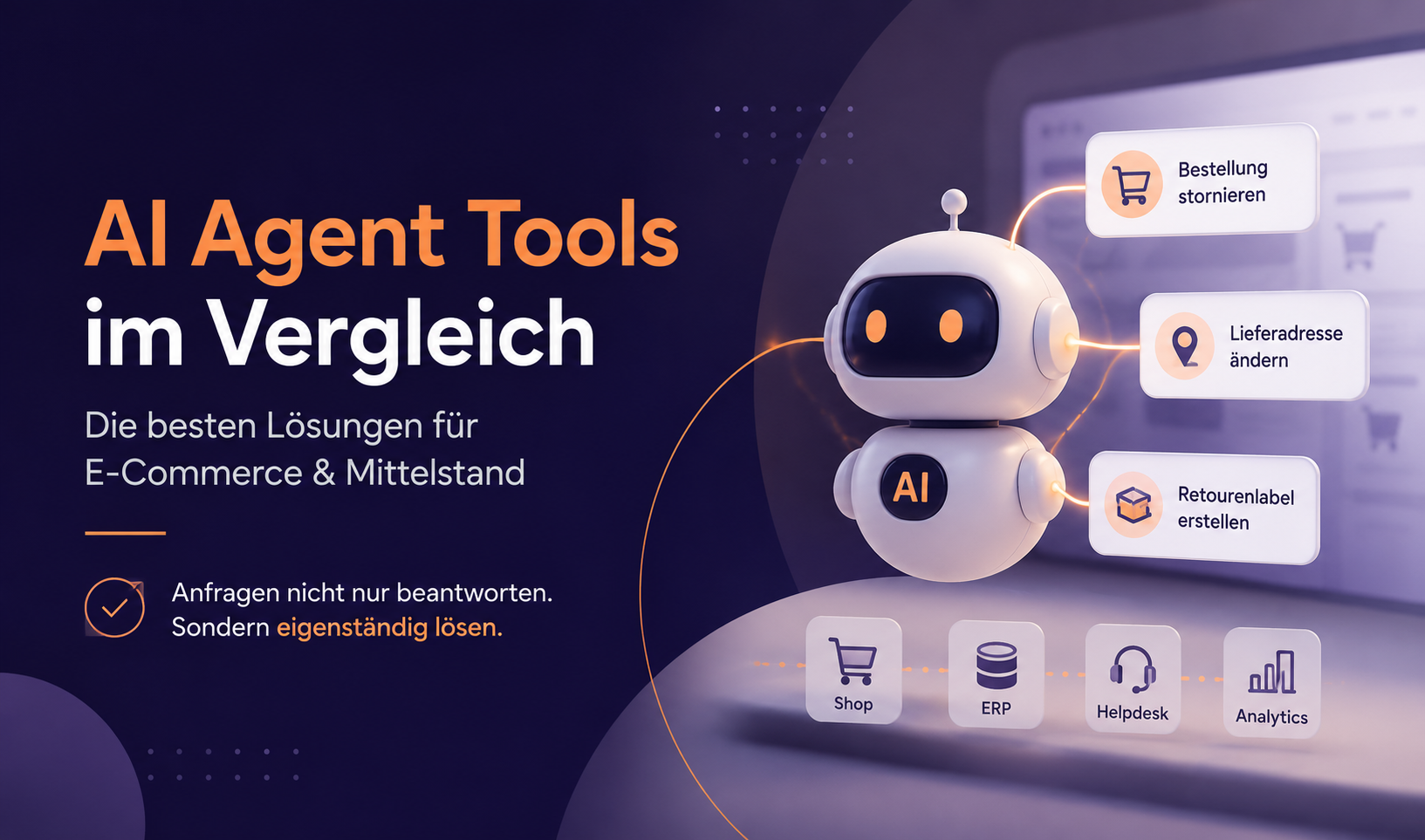
In 2026, the focus is also shifting from classic chatbots to AI agents. These systems don't just answer questions – they can carry out tasks. They access data sources, tools and business systems and actively support you with processes such as ticket creation, lead qualification, appointment booking, order status queries or internal workflows.
The key benefits of AI chatbots
An AI chatbot improves your service quality because requests are answered faster and customers don't depend on business hours. Efficiency also increases, because recurring tasks are automated and your team spends less time on standard questions. This can create noticeable value, especially in customer service, e-commerce, sales, marketing and HR.
Another benefit is scalability. An AI chatbot can handle many conversations at the same time without waiting times. That's especially valuable during seasonal peaks, product launches, campaigns or higher support volumes. Chatbot interactions also give you valuable insights into frequent questions, customer needs, purchase barriers and process gaps.
If you connect your AI chatbot to CRM, shop or helpdesk systems, it becomes even more powerful. It can then go beyond general information and answer in context — for example about orders, delivery status, returns, product availability, customer data or existing tickets.
AI chatbots in customer service
Customer service remains one of the most important use cases for AI chatbots. Your bot can answer frequent questions, help customers with orders, provide information on delivery and returns, record complaints or pre-qualify technical problems. This reduces request volume for your support team while improving your company's availability.
The hybrid approach of AI chatbot and human service is especially important. A good AI chatbot recognizes when an issue is too complex, sensitive or individual. In that case, it hands the request over cleanly to a team member — including conversation history, context and relevant customer data. That way, nobody has to repeat themselves and your team can pick up right where it's needed.
AI chatbots in e-commerce
In e-commerce, the AI chatbot becomes a digital sales advisor. It helps your customers find products, answers questions about sizes, variants, availability or delivery times and supports the buying process. It can also make product recommendations, suggest alternatives and guide customers through your range.
Guided selling is especially relevant here. Your AI chatbot asks targeted questions, understands your customers' needs and recommends suitable products. This not only improves the customer experience but can also increase conversion rate, basket value and customer satisfaction.
The chatbot stays important after the purchase too. It can answer questions about order status, shipping, returns or complaints, taking the load off your support team. That makes your AI chatbot a constant companion along the entire customer journey.
AI chatbots in sales and marketing
In sales, an AI chatbot helps you capture leads automatically, qualify them and pass them on to your sales team. It can answer first questions, provide information about products or services and guide prospects to the next step — such as a demo, a consultation or a quote.
In marketing, an AI chatbot helps make campaigns more interactive. Instead of just sending users to a landing page, you can start a conversation with them directly. The bot can ask about needs, recommend relevant content, support newsletter sign-ups or collect contact details. This turns passive website traffic into an active communication channel.
A well-designed AI chatbot can also have a positive effect on how your brand is perceived. If the bot is helpful, fast and communicates in your brand's tone, it builds trust and improves the user experience.
AI chatbots in HR and for internal processes
AI chatbots also offer great potential internally. In HR, they can answer applicants' questions, support the recruiting process, receive CVs or documents and help with onboarding. New employees can use the chatbot to get information about processes, tools, contacts or internal policies.
An AI chatbot can also serve as an employee self-service assistant. It helps employees find forms, prepare leave requests, discover training opportunities or answer internal questions. This takes the load off HR, IT and operations teams and makes internal knowledge accessible faster.
That's a big advantage, especially in growing companies. Knowledge is often scattered across documents, emails, tools or individual teams. An AI chatbot can bring this information together and provide it to employees exactly when they need it.
AI agents: the next step after the chatbot
One of the most important topics for 2026 is the shift from chatbot to AI agent. A classic chatbot answers questions. An AI agent goes a step further: it can carry out tasks, use tools and actively support processes.
For you, this means your AI chatbot doesn't just explain how something works but can prepare or trigger the next action directly. It can create a support ticket, add a lead to the CRM, book an appointment, check an order or combine information from different systems.
This creates completely new automation possibilities. The AI chatbot becomes a productive part of your business processes. It's important to define clear rules and limits, though. Not every decision should be fully automated. Especially with sensitive, legal, financial or emotional topics, people should stay involved.
Multimodal AI: when chatbots understand more than text
Modern AI chatbots can increasingly process more than just text. Multimodal AI makes it possible to understand images, documents, screenshots, tables, speech and, in the future, video. This opens up new use cases for customer service, e-commerce, HR and internal processes.
Your customers could, for example, upload a photo of a defective product and get suitable help right away. Your support team could have screenshots of error messages analyzed. Your HR team could process documents like CVs, references or applications more efficiently. In e-commerce, a bot could recognize product images and recommend matching items.
This development makes AI chatbots much more versatile. They're no longer just text-based assistants but intelligent interfaces between people, documents, images, speech and business systems.
Knowledge hubs and RAG: why company knowledge is decisive
An AI chatbot is only as good as the information it can access. That's why building an up-to-date, well-structured knowledge base is becoming more and more important. Modern AI chatbots shouldn't answer freely from the model but draw on verified company sources.
This is where retrieval-augmented generation, or RAG, comes in. The chatbot searches connected sources for relevant information and uses it to formulate a suitable answer. These sources can be FAQs, website content, product data, help center articles, internal documents, policies or CRM data.
For you, this means: the quality of your AI chatbot doesn't just depend on the model but above all on your knowledge management. If your content is up to date, clearly structured and complete, your bot can answer much more reliably and helpfully.
Voice AI and AI phone assistants
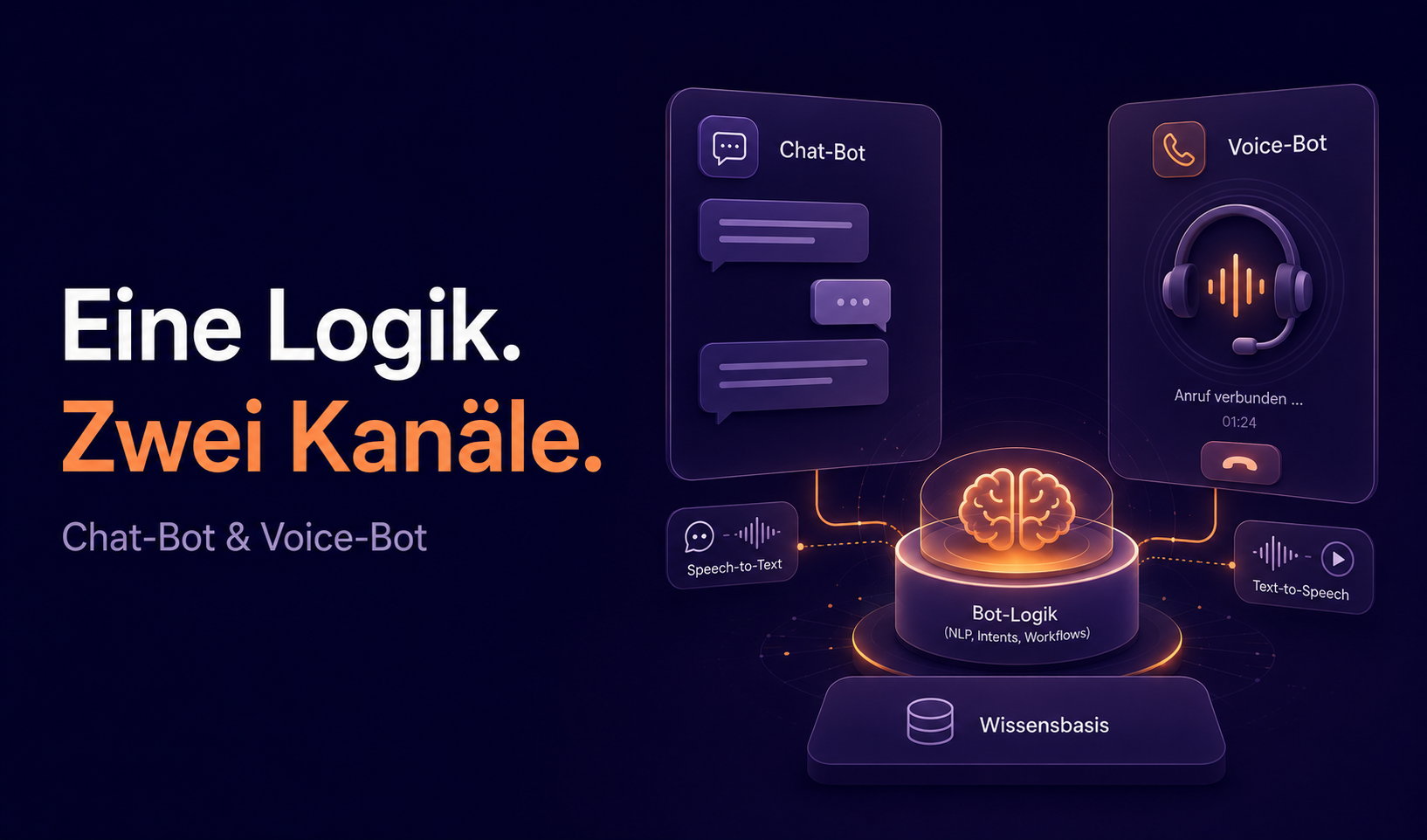
AI chatbots aren't just used in web chat. Voice AI and AI phone assistants are also gaining importance. They let you automate phone requests, recognize issues faster and route customers directly to the right place.
An AI phone assistant can understand natural language, ask for information, resolve simple issues or prepare calls for your team. Especially in customer service, this can reduce waiting times and improve availability. At the same time, you take the load off your team because simple requests no longer have to be taken manually.
The future lies in cross-channel systems. Web chat, WhatsApp, app, email, tickets, phone and voice assistants are converging more and more. Your customers no longer expect to adapt to your internal channel structures. They simply want help wherever they are.
Omnichannel and conversational commerce
A modern AI chatbot shouldn't work in isolation on a website. It should be part of an omnichannel strategy. That means your customers can communicate with you via different channels — such as website, app, WhatsApp, email, social media, live chat or phone — and still get a consistent experience.
In e-commerce in particular, this creates conversational commerce. Customers can get advice right in the conversation, compare products, receive recommendations, clarify questions and make purchase decisions. The chatbot becomes a digital advisor that combines service and sales.
This offers your company big opportunities. You can reduce purchase barriers, guide customers to the right product faster and gain data that helps you further optimize your offering and customer journey.
Data protection, the EU AI Act and AI governance
The more powerful AI chatbots become, the more important data protection, security and governance become. If you use AI chatbots, you have to make sure personal data is protected, legal requirements are met and AI interactions are transparent.
That includes GDPR-compliant data processing, clear consent, data minimization, secure integrations, role and permission concepts and traceable documentation. Users should know when they're interacting with an AI. It should also be clearly defined which data is processed and when a human has to take over.
The EU AI Act also makes it clear that companies must use AI responsibly. For you, this means: AI chatbots shouldn't just be technically powerful but also secure, transparent and controllable. Governance thus becomes a central success factor for every AI project.
Shadow AI and security in the company
Another important topic is shadow AI: the use of AI tools without official approval, control or data protection review. Many employees already use AI in their daily work to write texts, summarize information or get tasks done faster. If unvetted external tools are used for this, sensitive company or customer data can end up in third-party systems without control.
That's why it's important to give your team secure, approved AI solutions. A company-owned AI chatbot can offer a controlled alternative. This enables productive work with AI without jeopardizing data protection, security and compliance.
Quality assurance instead of one-off training
An AI chatbot project doesn't end at launch. To keep your bot reliable in the long term, you need continuous quality assurance. People used to talk about training a chatbot once. Today, it's much more about knowledge management, monitoring, feedback and regular optimization.
You should regularly check which questions your bot answers well, where misunderstandings occur and which content is missing from your knowledge base. Escalations, user feedback and frequent searches also provide valuable clues. That way, you can improve your AI chatbot step by step and make sure it stays up to date, helpful and reliable.
It's also important to define clear test questions and quality criteria. Your bot shouldn't just work technically but solve real user problems. Only then does it create lasting value for your company and your customers.
Frequently asked questions about AI chatbots
What is an AI chatbot?
An AI chatbot is a digital assistant that understands natural language and responds automatically to questions or requests. Modern AI chatbots use large language models, natural language processing and company knowledge to give helpful, contextual answers.
What are the benefits of an AI chatbot for your company?
Above all, an AI chatbot gives your company more efficiency, better availability and a scalable customer experience. It helps you answer service requests faster, take the load off your team, automate processes and support customers around the clock.
What's the difference between a chatbot and an AI agent?
The difference between a chatbot and an AI agent lies mainly in their scope for action. A chatbot mainly answers questions. An AI agent can also carry out tasks, use tools and trigger processes. This lets it create tickets, qualify leads, book appointments or retrieve data from systems, for example.
Which business areas is an AI chatbot suited to?
An AI chatbot is especially suited to customer service, e-commerce, sales, marketing, HR, internal processes, industry, tourism, education and public authorities. Wherever there are many recurring questions or standardized processes, an AI chatbot can create real value.
Can an AI chatbot be used in a GDPR-compliant way?
An AI chatbot can be used in a GDPR-compliant way if data protection, hosting, consent, data minimization, role permissions, logging and secure integrations are implemented properly. It's important that you protect personal data and establish transparent processes.
Does an AI chatbot replace human employees?
A good AI chatbot doesn't replace your team. It relieves it. It takes over simple and recurring issues, while complex, emotional or sensitive cases are handed over to human staff.
Outlook: the future of AI chatbots
The future of AI chatbots doesn't lie in simple question-and-answer dialogs but in intelligent, connected assistance systems. In the coming years, AI chatbots will be increasingly connected to company knowledge, customer data, communication channels and operational systems. This creates digital assistants that don't just react but actively support.
The transition to AI agents will be especially important. These systems can prepare tasks, combine information from different sources and carry out concrete actions in connected tools. For you, this means: your AI chatbot goes from support channel to productive part of your business processes.
At the same time, voice AI, multimodal AI and omnichannel communication will continue to gain importance. Customers will expect to reach you via whichever channel is most convenient at the moment — website, app, WhatsApp, email, phone or voice input. Successful companies won't treat these channels separately but will combine them into a consistent conversational AI strategy.
With this development, the demands on trust, data protection and quality are also rising. A powerful AI chatbot must not only answer quickly but also provide correct information, protect personal data, enable transparent processes and reliably hand sensitive issues over to people.
If you use AI chatbots strategically, you can increase your service quality, relieve your team, cut costs and create new digital customer experiences at the same time. The decisive success factor isn't just the best AI model but the combination of a clear strategy, high-quality company knowledge, secure integrations and continuous optimization.
Want to know what automation potential your customer service holds? Book a free strategy call