From chatbots to hotlines – but email remains number one
Today, customers have various ways to get in touch with companies. They can try the service hotline, forms on companies' websites, DMs on their social media channels or chatbots.
While younger generations in particular prefer to look things up themselves first and search for a solution in your company's self-service area, 93% of customers still use email to contact companies.
Besides current support requests, it has also been shown that new customers can be reached 40 times more often through email than through other channels. So email also remains an important marketing tool for companies.
Why is email so popular?
One explanation for why email is so popular in customer service, especially among customers, is habit. We humans are creatures of habit and like being able to rely on something that doesn't change too much or too quickly. What's more, everyone in the working world uses email programs, which makes them not only familiar but also easily accessible. Unlike a phone call, email threads are easy to follow and create a trustworthy paper trail for customers and companies alike.
The current situation with email in customer service
Your customer service staff often can't keep up with handling emails at all. If you're not sure where your customer service currently stands, take our test here. Some companies see no other option than simply switching off the email channel, so their employees at least get a chance to work through part of the mountain of inquiries. But above all, this means your customers can't reach your service team and may vent their anger in bad reviews of your company.
Some companies try to get the situation under control with different email addresses, hoping to implement a kind of ticket routing so inquiries always go to the right employees. But that makes your customer service more confusing, and your customer effort score (CES) rises rapidly. Now customers have to click through all the contacts just to find the right one.
When one customer sends inquiry after inquiry, the email chain gets longer and more confusing. If another service agent wanted to take over the same customer's next inquiry, they'd need extensive background knowledge of the entire customer history.
All in all, employees can barely keep up, and in the end the individual tickets get more and more expensive.
Ticket costs for email in customer service
To calculate ticket costs, all monthly expenses relevant to answering tickets are added up and then divided by the number of monthly tickets. That gives you the cost per ticket.
Or more precisely: the cost of a ticket is made up of agents' salaries, the salaries of everyone indirectly involved (including managers and shift leaders), the cost of the technology needed to answer tickets, and the monthly cost of office space and supplies. Depending on the industry and company setup, travel and additional training can also be included. Then the expenses just need to be divided by the monthly number of tickets received, and the cost per ticket is known.

When it comes to saving on ticket costs, many larger companies rely on customer service outsourcing. You can read about the pros and cons of this approach in our blog article.
Email tickets or live chat: where do my tickets come from?
How best to automate your customer service depends on which channels you already serve. Where do most support requests reach you? How do you prefer to communicate with your customers? Is live chat or email ticketing more important for your company?
Live chat
Via live chat, your customers can interact directly with your support team in real time, often chatting with a support agent right on the website. That gives your customers a fast, easy way to get in touch. At the same time, agents can respond personally right away, and this personal, fast contact can lead to a higher conversion rate. Doubts about a purchase can be cleared up immediately, and product advice can also offer further products for cross-selling and upselling.
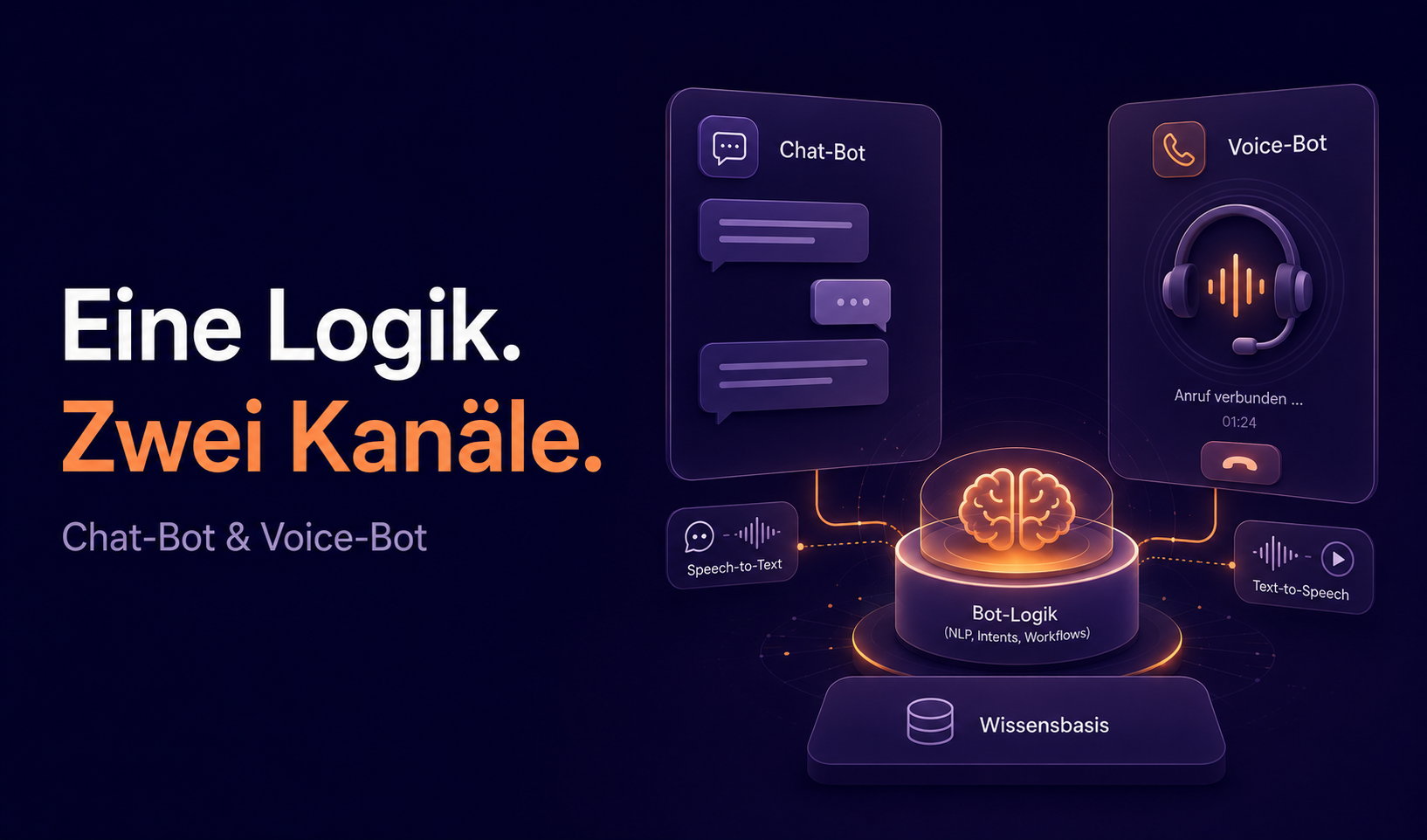
The easiest way to automate this channel directly is a chatbot. Many recurring inquiries can be handled by a chatbot, taking the load off your customer service. If the chatbot can't help, customers can always be forwarded to live chat with your employees. At the same time, chatbots use natural language processing (NLP) to offer a natural conversation flow while always staying polite and courteous. With collected customer data, chatbots can also respond personally to your customers, which has a positive effect on customer satisfaction – especially since this service is available to them 24/7.
You can find out which chatbot providers there are and how to find the right chatbot for your company in our blog articles.
Email ticketing
An email ticketing system is especially useful when inquiries reach your customer service team through different input channels. Whether via the support email address or a form on your website – with a ticket system, everything arrives bundled in your service team's email channel. In general, email isn't expected to have the same immediacy as live chat. At the same time, it's a better way for customers to describe more complicated issues.
This channel can also be automated easily with Ticket Automation. Before we look at the possibilities and features of Ticket Automation, let's first take a look at the current situation in many companies that rely on email in customer service:
How can email in customer service be automated with AI?
Developments in AI and automation are moving fast. One of AI's newest capabilities is automating email tickets. In just four steps, your company can reach up to 60% automation. So-called Ticket Automation makes your customer service faster, more efficient and above all more relaxed for customers and service agents.
- First, the AI goes through all incoming support tickets and analyzes them in order to sort them into different categories. That makes your entire inbox clearer and helps your employees find their way around more easily.
- About 75.5% of incoming support tickets are first-touch resolution tickets, meaning these inquiries can be resolved with a single message. This is where some of the greatest automation potential lies. When the AI answers these inquiries automatically, it takes a significant load off your customer service team. The AI can be trained for your specific industry, so your industry's typical questions are no problem. It can also be trained on the specifics of your products and so automate even more inquiries directly.
- What some companies tried with different email addresses is easy with Ticket Automation. Once the support tickets have been categorized in the first step, they can be assigned to the service agents with the best expertise in the relevant area. At the same time, the AI can make sure support requests are distributed evenly across agents. That prevents one agent from being completely overloaded while others twiddle their thumbs.
- Finally, Ticket Automation can support your agents in answering inquiries by providing suggested answers that your service agents can accept or edit. That way, agents always keep control over the AI's answers, but spend less time searching for the right wording and can help your customers quickly and easily.
-

You'll find all further information on Ticket Automation on our website or in our blog article.
Email in customer service with AI
Now that a large share of support tickets is answered directly by AI, your team can focus on more demanding and profitable inquiries. Process improvements not only become possible but can actually be implemented by your support agents, because they now have enough time to work on them.
Some people still picture robotic, dry bullet points when they think of automated answers. But that kind of communication is long gone. Thanks to natural language processing, many customers can hardly tell an AI-generated answer from a human one, because a conversation with a trained AI can feel so natural.
Inquiries that can't be resolved with a single answer are now forwarded to your service agents, taking into account who has the most expertise to answer them. If an agent is specially trained in customer complaints, for example, they're forwarded to her, and since she'll now deal with this kind of inquiry more often, she'll develop a routine that helps her assess and answer each inquiry faster. And if the right words don't come, the AI helps out with various suggested answers that the agent just needs to personalize and send to the customer.
Conclusion: automated email in customer service
Email may not be the newest technology in customer service, but it has proven itself as a reliable and valued communication channel – for customers and companies alike!
If your company works mainly with email tickets and can barely keep up, automating support tickets should be your top priority. It not only takes the load off your customer service, leading to more relaxed agents and therefore better service, but also saves real costs. Every ticket you automate brings your costs down bit by bit.
But automation isn't about automating your entire customer service. Some inquiries need interaction with your human service agents. Together, though, AI and agents are unbeatable, and your customers will appreciate the fast, polite and personal service.