Introduction
Find out here what 2024 holds for customers and which new requirements companies should adapt to. This article brings together and explores several customer service trends. But first: what does good service actually mean?
What does good service mean in 2024?
Good customer service is reachable, always polite and always professional. You're an expert on your own product and ideally have answers to questions ready. That demonstrates competence and expertise. You should also respond promptly and transparently to give customers a sense of security. Searching for solutions together and keeping promises reinforces that feeling. Today, the best way to stand out from the competition is excellent customer service that also includes efficient processes for your own employees. And don't forget that many customers are willing to pay more for good service.

What are the current trends in customer service?
It should come as no surprise that in 2024 the focus of customer service is on automation with artificial intelligence and generative AI. Overall, customer service has moved more and more into the spotlight in recent years and is now seen as a success factor for companies.
Especially in B2B, personal engagement now comes first. At the same time, automating complex service tasks is becoming more and more important in order to offer timely, personalized service solutions.
Since the pandemic, efficiency and effectiveness have emerged as a trend for companies. Technologies and tools added quickly during the pandemic mean that every tool is now under scrutiny. Using a tool is no longer enough – above all, it has to be efficient and make sense for the company. That's how existing business processes are optimized.
The top 5 customer service trends in 2024
Fast communication
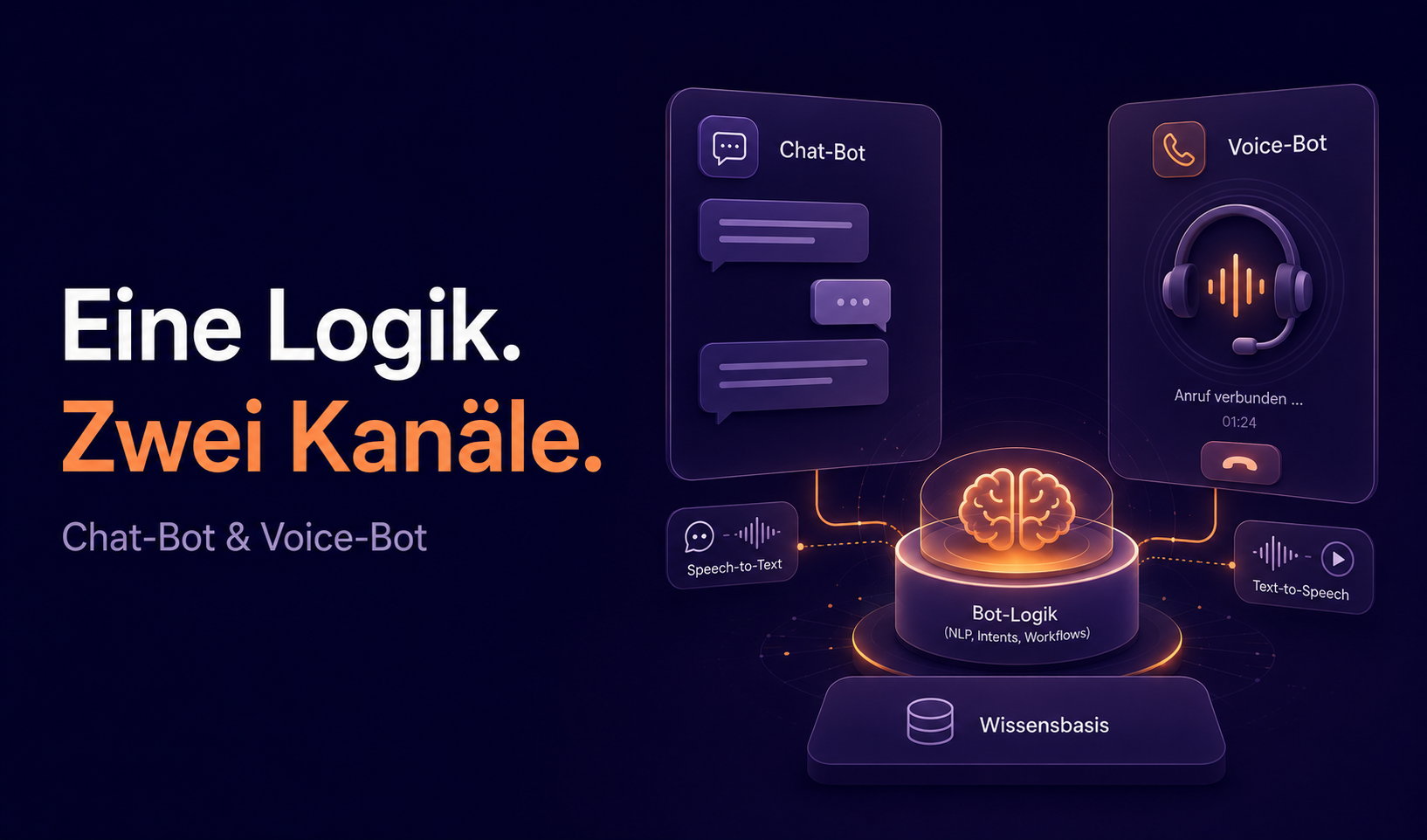
The days of regular opening hours are over. Artificial intelligence makes it possible (and is now expected!) for communication with a company to happen in real time. That's impossible with human staff alone – which is what chatbot solutions like ours are for.
Customers also increasingly value personal engagement. It's no longer enough to know the customer's first name – the context matters too. What are their personal goals and interests? Has the company understood them and does it address them? If a company can answer these questions positively, it builds trust, which increases loyalty and ultimately leads to higher sales.
Hyper-personalization
Personal, more personal, hyper-personal. The trend continues in 2024. By pulling information and data from every available channel and combining it into a customer profile, you can draw conclusions about the customer's concern. The profile is then used for highly individualized engagement with the customer. Especially in services, products hardly differ. So the best possible engagement is essential for customer acquisition and retention.
Customer service staff get support with this task from large language models (LLMs). Once well trained, they can respond to customers individually and make decisions independently. Standard processes are automated, so human intervention is needed less and less. That lets a single customer advisor look after more customers than ever without giving up individual, personal engagement.
Leading companies in particular now use affinity scores to determine the likelihood that a customer is interested in a particular product. If people with a high affinity score are then targeted, the likelihood of a sale is significantly higher. So you achieve more conversions for the same marketing costs by using data for hyper-personal engagement and building a holistic customer profile.
But be careful: some customers don't like sharing their data and become suspicious more quickly. The more benefit customers get from sharing their data, though, the more willing they are. If customers feel that data is being used that they didn't want to share, they may withdraw their consent. So companies need to find a good middle ground for using customer data – not scaring off cautious customers on the one hand, while making the best use of the available data on the other. It can help to show customers transparently which data is used and offer the option to delete it. That builds trust and makes customers feel good.
Omnichannel approach
Omnichannel means offering customers a consistent experience across different marketing and sales channels. Switching from a physical store to the website should be just as smooth as switching from social media to the mobile app. The free flow of information can increase both customer satisfaction and sales. The conversational experience is also part of the omnichannel approach. Conversations that start with a chatbot and are then handed over to an employee should flow as smoothly as a normal sales conversation. Because employees have all the chatbot's information, they can create the impression of one continuous conversation.
But the omnichannel approach doesn't just benefit customers. Employees also benefit from an omnichannel CRM system that links all communication channels and bundles them centrally. That helps them keep track of the different channels and ensures a smooth flow of information between teams and individual employees. Passing on information means customers don't have to repeat themselves, so they get annoyed less often.
Self-service portals
With self-service portals, companies offer their customers help to help themselves. And customers love it! Whether through informative websites, downloadable manuals or (our favorite) a chatbot, 88% of customers now expect companies to offer a self-service portal. According to one statistic, 73% of customers would rather solve their problems on their own before asking for help. 67% even said they prefer self-service portals to interacting with a customer advisor! Younger generations in particular prefer self-service, but this also comes with a certain need for immediacy: if the problem can't be solved right away, 52% of millennials and Gen Z would refrain from buying from that company. You'll find all the statistics on self-service portals here.
So setting up a self-service portal should be a no-brainer for companies. Customers prefer them, and at the same time they take the load off customer service by answering simple questions on their own. They're available around the clock and save the company time and money.
AI support for employees
AI is becoming more and more important: even though chatbots are already used effectively in customer service, that isn't the only use for generative AI. It can also help employees write answers faster, saving time and money. Professionals can focus on more important aspects of their job and on developing a better understanding of their customers. AI can also help train new employees and so ensure fast, reliable customer service from day one.
Another problem AI can help solve is the high turnover rate among customer service staff. Lots of inquiries, little time and often impatient customers lead to a lot of stress. If a chatbot takes over some of the inquiries, for example, employees get relief and stay longer. True to our company motto: no more stress in customer service!

Conclusion: customer service trends 2024 – automation, personalization and AI
Generative AI as the new standard in customer service
So it's clear: generative AI is becoming more and more the standard in customer service. It increases efficiency, promotes customer satisfaction and counters the skills shortage. Especially in uncertain times, a company's adaptability is everything. Whether customers want human contact or a chatbot, to walk into a store or to solve the problem with a self-service portal – a top company is prepared for all of it and adapts to its customers' wishes. When it comes to responsible, transparent use of AI, a company can't afford to wait and see; it has to deal with the topic proactively. Companies' competitiveness is decided anew every month, if not every week. Especially when it comes to good service, a chatbot can make a big difference. It always stays polite and professional, and may even get a bit more understanding when it can't answer questions. But in the age of social media, customer service can afford fewer and fewer mistakes. Reviews get written, reaction videos uploaded and zero stars handed out in no time.
Omnichannel, customer satisfaction and the role of professional guidance
An always-friendly chatbot helps avoid the pitfalls of interactions and minimizes the risk of dissatisfaction. At the same time, the omnichannel approach lets you meet customers exactly where they are – whether on your website, on social media or with a human contact person. When customer service staff have access to all customer information, they can help more directly, more personally and above all faster. The mix of hyper-personal engagement and high competence leads to stronger customer loyalty and greater trust in the company. For all the benefits AI brings companies, one thing should also be kept in mind: "someone ignorant with AI [remains] ignorant" (pwc.de). That's why it takes professional help from providers who take companies and customers by the hand and support them in finding the right way to use generative AI in their business.
If you'd like to know how to improve your customer service, we recommend this article.