What is a chatbot anyway?
"How can I help?" – that's a typical line chatbots greet you with when you come across them online. Today these smart little helpers are simply part of many areas, and they're evolving rapidly thanks to artificial intelligence. Maybe they'll soon pass the Turing test?
But how did it all start?
In this post, we give you an overview
- of chatbots from their beginnings
- to today's next-generation chatbots.
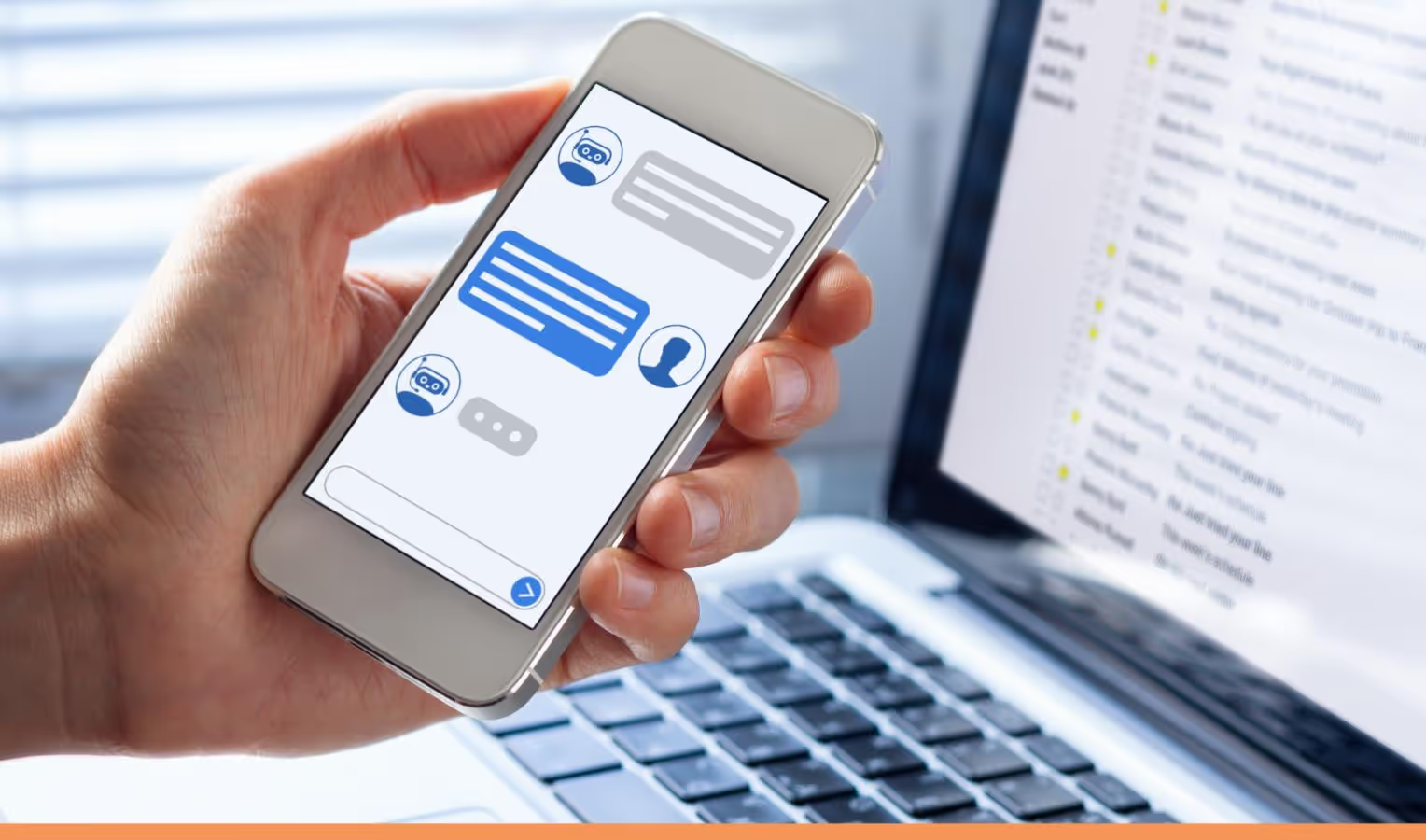
Put simply, a chatbot is a technical dialog system. We usually see these little helpers as an avatar on websites or messaging platforms. They help with questions about services and products. A conversation between person and system can take place via text or voice input. You enter your text or voice message and get an answer the same way.
How does the bot do it?
Older chatbots are rule-based and draw on a catalog of predefined questions and answers. So they quickly reached their limits. In that case, they usually referred or forwarded you to customer service.
Bots based on artificial intelligence are cleverer. They can learn from existing dialogs. That way, the chatbot understands what intent might be behind a question and independently creates more sophisticated dialogs that can seem almost human.
But how did it all start?
Leonardo da Vinci already sketched a robot in his time. It could sit down and move its arms, legs and head. Of course, back then it wasn't about artificial intelligence, but rather mechanical automata. According to Spiegel Netzwelt, Isaac Asimov, one of the world's best-known science fiction authors, formulated his so-called Three Laws of Robotics in a short story as early as 1942. They set out the basic rules for robots serving humans. So the relationship between humans and robots has occupied humanity for many years.
The first chatbot
Some years later, in 1966, the first chatbot, ELIZA, was developed by Joseph Weizenbaum. It was meant to imitate human conversation. ELIZA simulated a psychotherapist and was celebrated as a milestone in artificial intelligence.
In the decades that followed, numerous developers tried to build on this model. The first advanced chatbot was introduced in 2009 by the Chinese company WeChat. To this day, it can be used to develop simple chatbots in all kinds of areas.
Social media platforms as pioneers
The first wave of this AI technology reached us in 2016. Facebook and other social media platforms made it possible to develop your own chatbots. These little helpers became part of everyday communication and made it possible to chat or talk.
When it comes to artificial intelligence, Siri, the intelligent personal assistant with a natural language user interface, deserves a mention. Developed by Apple in 2010, it laid the foundation for all further AI bots and intelligent personal assistants.
What is the Turing test?
Anyone dealing with AI and chatbots will sooner or later hear about the Turing test: the idea dates back to 1950 and is more interesting today than ever. It's meant to determine whether a computer – or, back then, a machine – can think as well as a human.
The test is carried out by having a test subject chat with a human and a computer and determine which one they're talking to.
The test was invented by British mathematician Alan Turing. He considered the test passed if the machine could fool at least 30 percent of its chat partners. To this day, however, it's disputed whether a machine or chatbot has passed the Turing test.
Conclusion: chatbots are here to stay as a service channel
Looking at the latest developments, passing the Turing test no longer seems far off. AI chatbots like ours from melibo can take your customer service a big step forward. Your customers' buying experience starts with individual advice, which NEXT-GENERATION CHATBOTS will keep optimizing.
Smart bots can take over the entire service, right through to checkout, and make it as pleasant as possible for customers. The bot can also suggest good personalized deals if it looks like customers are about to drop off. Certain loyalty processes are possible too, to retain customers.
In 2022, Gartner predicted that by 2027 chatbots would be the main service channel for a good quarter of all organizations. What are you waiting for? https://melibo.de/en