Leads on autopilot: why automation in the sales funnel is indispensable
What is automated lead generation?
Automated lead generation is the art of getting prospects excited about your product or service and getting them to reach out proactively. It can take place online or offline and aims to capture contact details (name, email, phone number). These leads are passed on to companies, which qualify them and convert them into customers.
Online vs. offline: how leads are created
In practice, online lead generation dominates today: most people search for products and services on the internet. Without visibility in search results (SEO/SEA), leads don't come in. At the same time, even with good visibility you need to actively encourage website visitors to get in touch – e.g. via forms, a chatbot, lead magnets or scheduling widgets. Offline channels (events, print, point of sale) can complement this and feed into the digital funnel.
Why automated lead generation is indispensable
Even a strong website doesn't generate leads automatically. You need clear conversion paths, user-centered content and triggers (CTAs, social proof, offers). Automation helps you collect leads regularly, at scale and measurably – without having to step in manually every time.
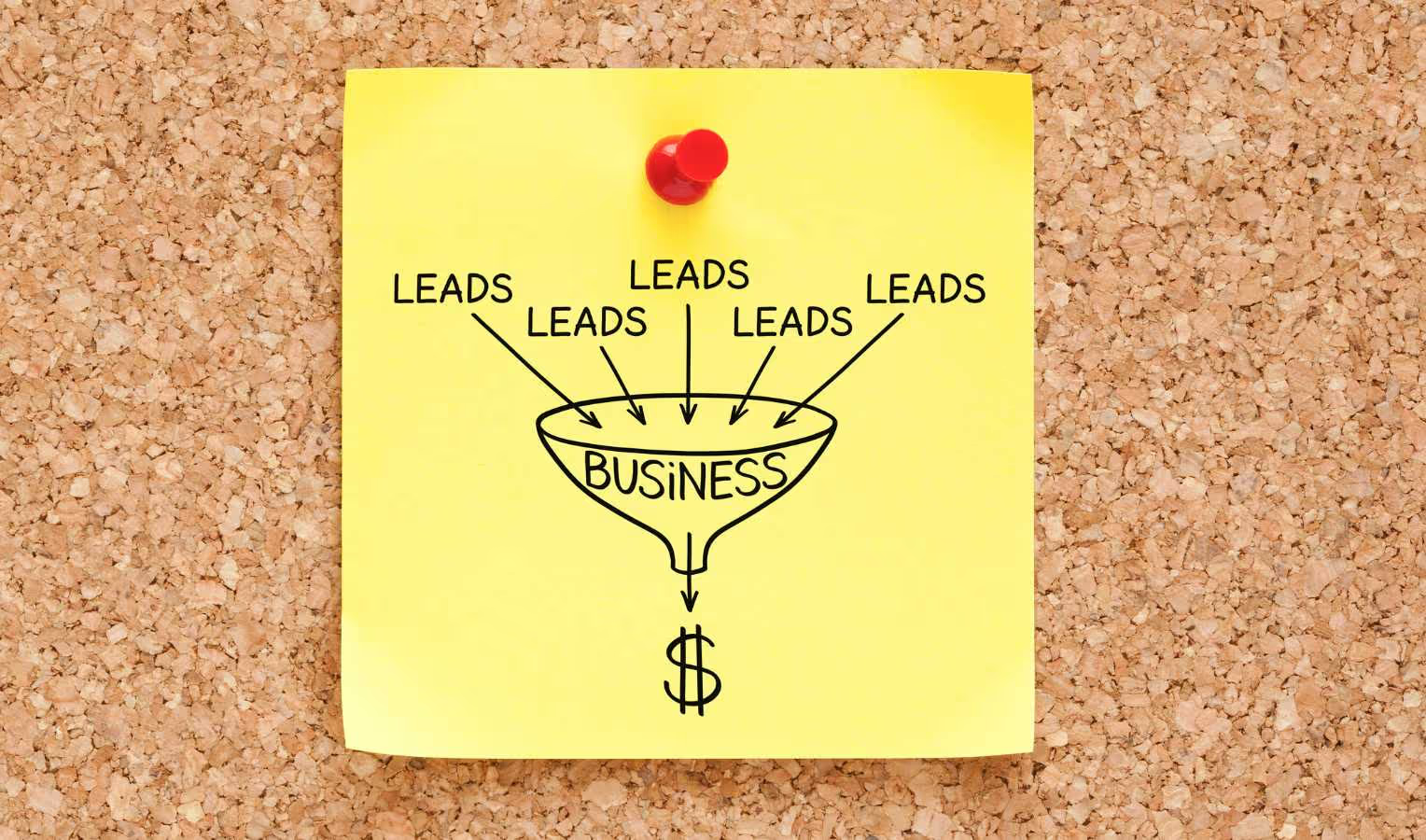
Lead generation as part of your sales funnel
Lead generation is an essential building block of the sales process: it opens up new business opportunities and can noticeably increase revenue. This requires strategic planning (target group, channels, offers, tracking) and clean implementation (forms, routing, nurturing, GDPR).
Outlook: 10 tips & chatbot automation
In the rest of this article, you'll get 10 concrete tips for optimizing your lead generation – and learn how a chatbot supports automated lead generation: from FAQ qualification and appointment booking to smart pre-qualification and handing data over to the sales team. First, we clarify what automated lead generation is exactly and why it matters so much for sustainable growth.
What is automated lead generation?
Automated lead generation is a process in which software or other tools are used to generate and manage leads. This process usually includes the following steps:
- Identifying potential customers: potential customers are identified using criteria such as location, age or income level.
- Contacting potential customers: the next step is to try to get in touch with potential customers – by phone, email or via social media.
- Qualifying leads: this step tries to find out whether a lead is actually interested in the company's products or services. This is often done by asking questions or offering free trial products.
- Passing qualified leads to sales: once a lead has been classified as qualified, it's passed on to sales so they can try to move the lead to a purchase.
Automated lead generation is usually based on special software or tools that support and automate the individual steps of the process. Commonly used tools include CRM (customer relationship management) software, marketing automation software and email marketing software. Exactly how automated lead generation works depends on the tool used. As a rule, however, all relevant data is stored and processed in a central database.
Why is automated lead generation important?
In an increasingly competitive market, companies can no longer rely on their target audience noticing their website or offering on their own. Instead, they need to actively look for new customers and win them over. This is especially important for small and mid-sized companies, which are often less well known than large corporations.
Automation as the key: methods & processes
One of the most effective methods of lead generation is automation. Automation lets companies carry out a range of activities to find and win potential customers. These include searching social media, serving personalized ads or sending personalized emails.
Benefits, efficiency & ROI of automated lead generation
The benefits of automated lead generation are obvious: automation saves companies a lot of time and resources they can invest in other areas instead. Automation also enables high reach and a high frequency of contact with potential customers. This increases the likelihood that a lead will actually become a paying customer.
Lead generation is also an essential part of any successful marketing strategy. By automating lead generation, companies can increase their efficiency and generate more leads in less time.
Numerous studies have shown that automated lead generation processes can significantly improve the ROI (return on investment) of marketing campaigns. A study by Forrester Research even found that companies that automate lead generation generate 50% more leads than those that don't.
So automating lead generation has many benefits for both companies and customers. Customers get the information they need faster, while companies have more time and resources for other activities.
10 tips & tricks for automated lead generation
Here are a few tips & tricks for successful lead generation:
1. Identify your target audience
The first and most important task in lead generation is identifying your target audience. This not only helps you choose the right words and tone for your campaigns but also gives you a clear idea of which types of content work best for your audience.
Identification can happen in different ways, but one of the most important tools is customer segmentation. Customer segmentation is a process in which companies divide their customers into groups based on certain criteria. This lets companies focus their marketing and sales activities on the customer groups with the most potential interest in their product or service.
2. Build trust
For people to get in touch with you, you need to show them you're trustworthy. You can do this, for example, by being as transparent as possible and providing all relevant information on your website. Reviews and testimonials from satisfied customers can also build trust.
3. Make it easy for your leads
Even if you offer something valuable, people won't use it if it's too hard or explained too awkwardly. So make it as easy as possible for your leads to get in touch with you. For example, provide a contact form on your website or offer the option of reaching you by email or phone.
4. Create interesting, unique content
Another important task in lead generation is creating interesting content. Only if you offer interesting, informative content will potential customers notice your company and become curious. So make sure you regularly publish high-quality content and market it in a targeted way.
Content can be offered in the form of blog articles, videos or infographics and should always be relevant to your target audience. The content should also be search engine optimized so potential customers can find it easily.
5. Create a lead magnet
For people to get in touch with you, you need to offer them something that interests them and that they really need. A lead magnet is a free offer you make to potential customers to get them to sign up for your newsletter or share other contact details. It should be something valuable to your target audience that makes them want to grab it. Inform your audience about news in your industry (e.g. in the form of a whitepaper) or provide them with useful tools. Discounts and special offers can also be an incentive to get in touch with you.
6. Use social media
Social media is another great way to get in touch with potential customers and win them over to your product or service. Business-to-business (B2B) companies in particular should use social media to connect with potential customers and engage in dialog with them.
With social media, you can easily reach lots of people and generate more leads. So use the various social networks for your campaign and run targeted ads (e.g. with LinkedIn's Lead Gen Forms).
7. Run Google Ads
If you want to generate leads, you should also use Google Ads. Google Ads is a paid form of advertising that guarantees you'll appear in Google's search results. This is an effective way to generate new leads, as targeting options let you address exactly the audience you want to reach.
8. Use email marketing
Email marketing is a great way to stay in touch with existing and potential customers. Regularly send interesting newsletters or special offers and link them to your landing page. This lets you generate new leads while strengthening the relationship with existing customers.
9. Use online PR
Online PR refers to promoting content on social media or other websites. This is an effective way to generate new leads and make your company better known. Look for relevant websites or blogs (e.g. with tools like Semrush) where you can publish guest posts or share content – the higher the quality of the content, the greater the chance it will be shared and generate new leads.
10. Run contests or promotions
Contests and promotions are another good way to generate new leads. People love winning prizes and taking advantage of discounted offers. By regularly running contests or promotions, you can win many new customers.
What role does the website play in automated lead generation?
Our 10 tips already show that a website can be a powerful lead generation tool if used correctly. The following tips will help you maximize the leads you generate through your website:
1. Use a clear, appealing design
A clear, appealing design is crucial for catching visitors' attention on your website. If your website is cluttered or confusing, visitors will quickly click away and you won't generate any leads. So make sure your design is clear and easy to navigate.
2. Add pop-ups
Pop-ups can be a great addition to any lead generation campaign – provided, of course, they're used correctly. When creating pop-ups, make sure they aren't too intrusive and don't hurt the user interface. Pop-ups should also be relevant to the page being viewed and actually get visitors to take the desired action.
3. Use call-to-action buttons
Call-to-action (CTA) buttons are an important element of any lead generation strategy. CTAs should be clear and clearly visible and draw visitors' attention to the next action you want them to take. For example, your CTA could read: "Click here to download our ebook" or "Sign up for our newsletter here". Use CTAs to get your website visitors to take the desired action so you can generate more leads.
4. Create good content
Good content is crucial for generating leads via a website. If you create relevant, useful content that meets your target audience's needs and interests, these people will stay on your website and want more. This increases the likelihood that they'll get in touch with you or take a desired action to get more of what you have to offer.
On the other hand, poor content will cause visitors to click away quickly and you won't generate leads. So make sure you create good content and publish it regularly to generate more leads through your website.
5. Use search engine optimization (SEO)
Search engine optimization is an important way to drive more traffic to your website and thus generate more leads. By optimizing your website for search engines, you can make sure your website ranks well for relevant search terms and gets more visitors. To find the right search terms, you can use a keyword research tool. Once you've found the right search terms, you can use them in your website content to improve your ranking in search results.
Automated lead generation with chatbots
Chatbots are a hot topic in the world of automated lead generation. These small digital assistants can collect large amounts of data about your customers and help you pre-qualify your leads.
Chatbots are computer-controlled dialog systems that let people communicate with a brand or company via text chat. In many cases, chatbots can shape the conversation so it resembles the natural flow of a human conversation.
So chatbots have the ability to interact with people and draw information out of them. This information can then be used to create personalized offers or content for leads.
For companies, chatbots are an effective way to get in touch with potential customers and inform them about their products or services. Chatbots can also be used to generate leads and increase the conversion rate.
Use cases, impact & next step
The possible uses for chatbots are almost unlimited. They can be used, for example, to:
• capture and track leads
• collect leads' contact details
• personalize content for leads
• guide leads through the sales process
• measure customer satisfaction after the sale
So if you're looking for a way to take the load off your sales and marketing teams and automate your lead generation, you should seriously consider setting up a chatbot. In recent years, chatbots have moved to the forefront of marketing technology. This is due to the growing demand for personalized communication and the growing need for automated lead generation. If you'd like to learn more about how to build a lead generation chatbot with melibo, book a free consultation now.
Conclusion
In this article, we've learned that lead generation is an essential part of any successful marketing strategy. By automating lead generation, however, companies can save time and resources. We've presented 10 tips and tricks for automated lead generation. By implementing these tips and tricks, you can significantly increase the efficiency of your lead generation.